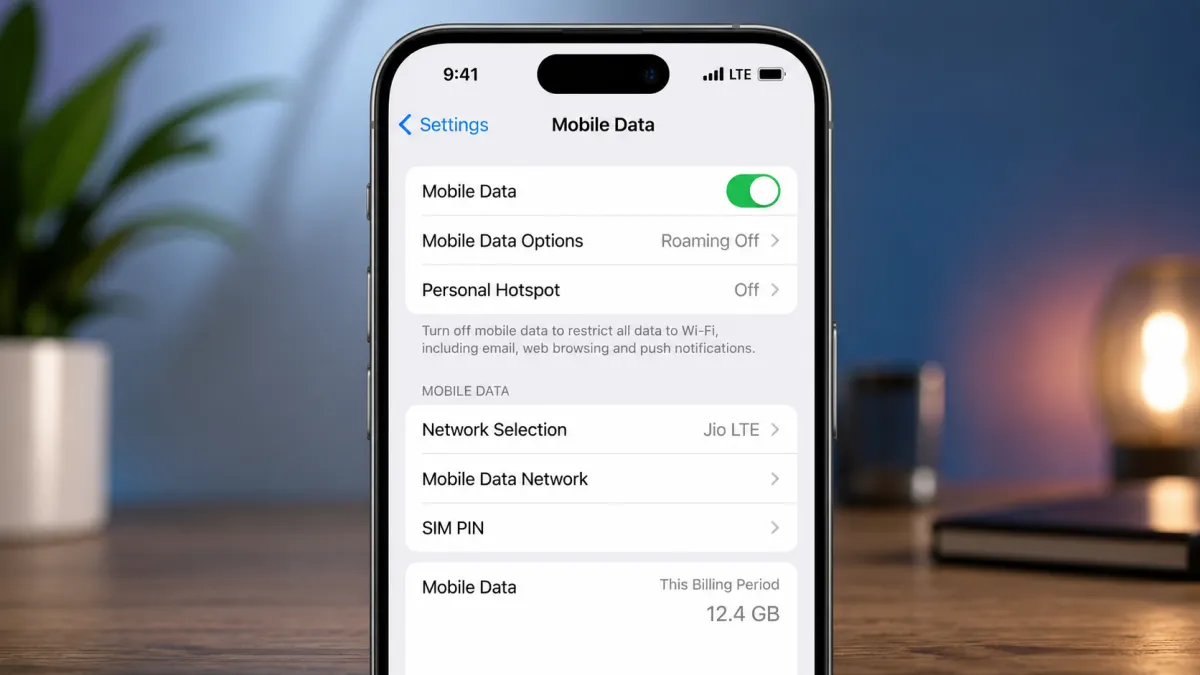
LTE is the technology behind much of the mobile internet people use every day. It connects smartphones, tablets, wireless routers, hotspots, and IoT devices to cellular networks, allowing them to browse websites, stream videos, use apps, and exchange data without a wired connection.
Even though 5G networks are expanding rapidly, LTE is still widely used. Its broad coverage, mature infrastructure, and compatibility with a huge range of devices make it an important part of today’s mobile communication systems.
Let’s look at what LTE is, how it works, and where the technology is still being used.
Also read: How to Link Aadhaar With Your Bank Account Online: Easy Step-by-Step Guide
What Does LTE Mean?
LTE stands for Long Term Evolution. It is a wireless broadband technology developed through the 3rd Generation Partnership Project (3GPP) to improve upon earlier mobile networks such as 3G.
LTE brought major improvements in mobile data speeds, network capacity, and latency. It became closely associated with the 4G generation of mobile networks and helped make activities such as HD video streaming, video calls, online gaming, and fast web browsing practical on smartphones.
The exact experience varies by carrier, device, spectrum availability, and location.
How Does an LTE Connection Work?
When you use mobile data, your phone communicates with a nearby LTE base station. That station connects your device to the operator’s core network, which then provides access to internet services.
A simplified version of the process looks like this:
- Your phone searches for an available LTE network.
- It connects to a suitable nearby cell site.
- The network authenticates your SIM and device.
- Your connection is established through the operator’s core network.
- Data travels between your phone and the requested online service.
- The response is sent back through the network to your device.
The entire process happens very quickly, allowing you to use online services without noticing all the individual steps happening in the background.
What Makes LTE Fast and Efficient?
LTE relies on several technologies to use radio spectrum efficiently. These technologies work together to improve network capacity, speed, and reliability.
OFDM
Orthogonal Frequency Division Multiplexing (OFDM) divides data across multiple closely spaced subcarriers. This allows LTE to make efficient use of available radio spectrum and helps the network handle different signal conditions.
MIMO
Multiple Input Multiple Output (MIMO) uses multiple antennas for transmitting and receiving data.
Depending on the network and device, multiple data streams can be handled simultaneously. This can increase capacity and improve performance when radio conditions are suitable.
Adaptive Modulation and Coding
LTE can adjust how data is transmitted according to the quality of the connection.
When signal conditions are good, the network can use a more efficient transmission method to deliver more data. When conditions become weaker, it can use a more robust configuration to maintain the connection.
Key Components of an LTE Network
An LTE system isn’t just a cell tower. Several components work together to provide mobile connectivity.
eNodeB
The eNodeB, or LTE base station, provides the wireless connection between your device and the network.
It manages radio communication with connected devices and handles important functions such as scheduling network resources.
E-UTRAN
The Evolved Universal Terrestrial Radio Access Network (E-UTRAN) refers to the radio access portion of the LTE network. It includes the LTE base stations that communicate with user devices.
Evolved Packet Core
The Evolved Packet Core (EPC) is the central part of the LTE network. It manages connections, routes data, authenticates users, and connects the mobile network to external networks such as the internet.
Together, these components allow carriers to manage large numbers of connected users across different locations.
Which Devices Can Use LTE?
LTE isn’t limited to smartphones. The technology is used in many types of connected equipment, including:
- Smartphones and tablets
- Portable Wi-Fi hotspots
- Cellular routers
- Industrial gateways
- Vehicle communication systems
- Security and monitoring equipment
- IoT devices
Different LTE categories and technologies are designed for different requirements.
For example, LTE Cat 4 can be used in devices that need relatively higher data speeds, while technologies such as LTE-M and NB-IoT are designed for connected devices that often prioritize low power consumption, coverage, and efficient data transmission.
How Fast Is LTE?
There isn’t one fixed LTE speed. Performance can change significantly depending on your carrier, signal strength, available spectrum, network congestion, device capabilities, and the LTE technology being used.
Under suitable conditions, LTE can provide download speeds ranging from several Mbps to well over 100 Mbps. Advanced LTE implementations can achieve much higher theoretical speeds.
Real-world speeds are usually lower than laboratory or theoretical maximums because many users share network resources and radio conditions constantly change.
What Is LTE Advanced?
LTE continued to evolve after its initial deployment.
LTE Advanced introduced improvements designed to increase capacity and performance. One important technology was carrier aggregation, which allows compatible devices and networks to combine multiple blocks of spectrum.
This can provide higher speeds and make more efficient use of the available frequencies.
LTE Advanced Pro
LTE Advanced Pro introduced additional improvements, including enhanced carrier aggregation, improved antenna techniques, and higher-order modulation.
Depending on the network configuration and compatible hardware, these technologies can provide significantly higher speeds than earlier LTE deployments.
You may also see terms such as 4G+ or LTE+ on some phones. These labels can refer to enhanced LTE capabilities, although the exact meaning depends on the carrier and device.
Why Is LTE Useful for IoT?
LTE has become particularly useful for connected devices that need cellular connectivity outside traditional Wi-Fi environments.
Businesses can use cellular networks to connect equipment in locations where installing wired internet may not be practical.
Examples include:
Smart Infrastructure
LTE-connected equipment can be used for:
- Traffic monitoring
- Smart lighting
- EV charging systems
- Environmental sensors
Transportation
Companies can use cellular connectivity for:
- Fleet tracking
- Vehicle monitoring
- Logistics systems
- Connected passenger services
Agriculture
LTE and related cellular technologies can support:
- Irrigation monitoring
- Remote equipment management
- Environmental sensors
- Farm tracking systems
Retail and Financial Services
Cellular connections can also be useful for equipment such as:
- Payment terminals
- ATMs
- Digital displays
- Remote monitoring systems
The appropriate cellular technology depends on factors such as data requirements, power consumption, coverage, and device location.
Is LTE Secure?
LTE includes multiple security mechanisms designed to protect network access and communication.
For example, mobile networks use SIM-based authentication to verify subscribers. LTE also incorporates encryption and security procedures to protect communication between devices and network components.
However, no network technology makes every online activity completely risk-free. Users should still follow normal security practices, such as keeping their devices updated, using strong account passwords, and avoiding suspicious websites or downloads.
LTE vs. 5G
5G is designed to provide higher performance and support new types of applications, but that doesn’t mean LTE has become obsolete.
Many 5G networks have been deployed alongside LTE infrastructure. In 5G non-standalone (NSA) deployments, LTE can continue to play an important role in the connection between the device and the network.
A compatible phone may also switch between 5G and LTE depending on coverage and network conditions.
LTE remains valuable because it offers:
- Broad coverage
- Extensive infrastructure
- Support for many existing devices
- Reliable mobile connectivity
- Compatibility with a wide range of IoT equipment
LTE, 3G and 5G: What’s the Difference?
Each mobile generation introduced improvements over the previous one.
3G made mobile internet considerably more practical and widespread.
LTE/4G brought substantially faster data connections, improved capacity, and lower latency, helping enable modern mobile broadband services.
5G builds on those developments with higher potential speeds, lower latency in suitable deployments, and support for large numbers of connected devices.
The transition between generations isn’t instantaneous. Different technologies can coexist, and the availability of each one depends on the carrier and region.
Why LTE Still Matters
Despite the growing availability of 5G, LTE continues to serve a large number of users and connected devices.
Its established infrastructure means operators can provide coverage across large areas, while businesses can continue using LTE-compatible equipment that may have long operational lifespans.
For many applications, especially those that don’t require the highest possible speeds, LTE provides more than enough performance.
Final Thoughts
LTE played a major role in transforming mobile internet from a basic convenience into an essential part of everyday life. Technologies such as OFDM, MIMO, and carrier aggregation helped networks deliver faster and more reliable wireless connections.
Today, LTE continues to connect smartphones, routers, industrial equipment, and IoT devices around the world. As 5G adoption grows, LTE is likely to remain an important part of cellular infrastructure, working alongside newer technologies and providing dependable connectivity where it’s still needed.

I am a passionate Tech Writer with strong industry experience. I enjoy exploring the latest technological innovations and sharing clear, helpful insights with my audience.